Spats Shoes: How the Look Works
In the early twentieth century, spats protected polished shoes and socks from mud and rain. By the 1920s they had become a style statement: white or pale gray spats over black shoes signaled a man who dressed with care, and they became part of the image of the city gangster and the jazz-age dandy.
You do not need special shoes. Spats slip over a regular lace-up or slip-on shoe and turn it into the two-tone look of the period. A smooth black shoe gives the cleanest result, while brown shoes soften the contrast for a daytime outfit.
Choosing White, Black or Colored Spats
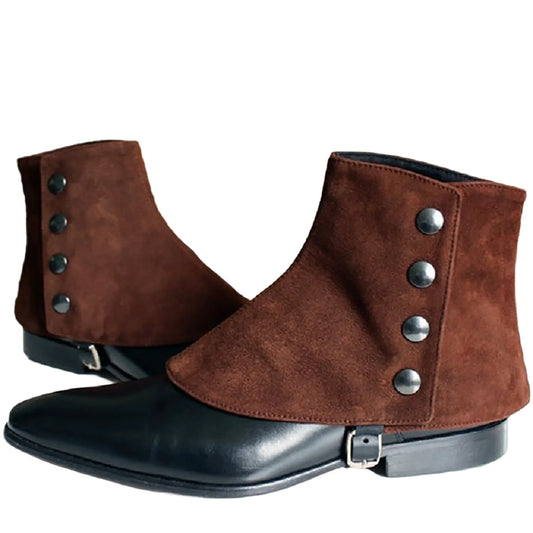
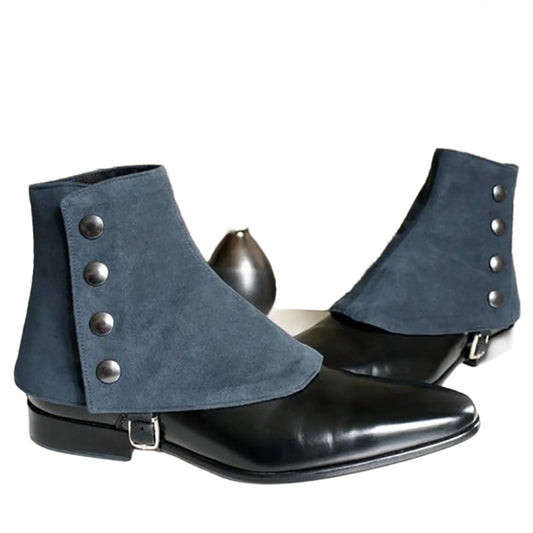
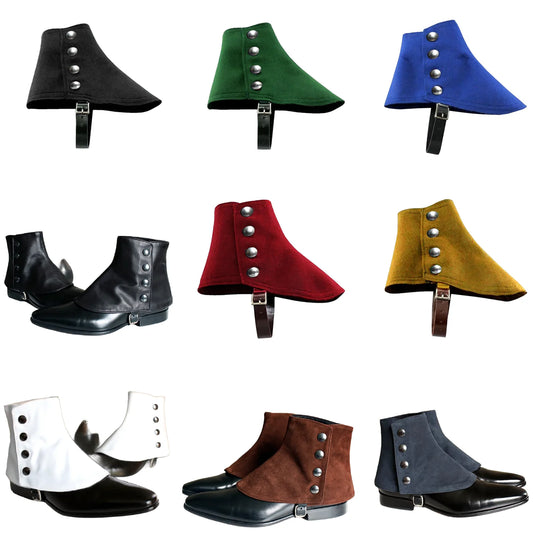
White spats are the classic choice and the most recognizable for a 1920s or gangster costume. Black spats, in a smooth or suede-look finish, are quieter and suit a tuxedo or a dark suit. Gray and brown pair well with tweed and herringbone. Mustard, red, green and royal blue are for stage costumes, marching band looks and themed parties where you want to be noticed.
Sizing Your Spats
Our spats are made of polyester and come in sizes M and L. Compare your usual shoe size with the size chart in each product's photos before you order, and try them over the exact shoes you plan to wear, since a chunky sole needs more room than a slim dress shoe.
Spats FAQ
What are spats?
Spats are cloth covers worn over the top of the shoe and the ankle. They were common in the 1910s and 1920s and are now worn for vintage outfits and costumes.
Can women wear spats?
Yes. Spats look sharp over Mary Jane or T-strap shoes, or over flat lace-ups with a 1920s trouser outfit.
What shoes go under spats?
Plain lace-up or slip-on shoes with a low heel work best. Black shoes give the strongest contrast with white spats.